
The Liberal State is a mask behind which there is no face; it is a scaffolding behind which there is no building.
— Benito Mussolini, Speech in Milan, Italy, October 6th 1922.
It was an ideology our grandparents and the free world dedicated their lives and futures into defeating; an ideology that caused the worst war in the history of humanity and resulted in the systematic murder of millions on a horrific scale. Yet for some, Fascism is seen as a new appealing alternative to the political systems offered by the current establishment.
The rising fear of terrorism post 9/11, controversial wars in Iraq and Afghanistan and a feeling of disenfranchisement felt by the traditional working class have laid the roots for Fascism to return, under a new alias; the Alt-Right. A movement that has spent years quietly building up, and 2016 was its time to shine.
A resurgence of fanatical nationalism inspired by Brexit has shaken the hornet’s nest. The West must now deal with a mentality that should’ve died in 1945 in a bunker under the Reich Chancellery.
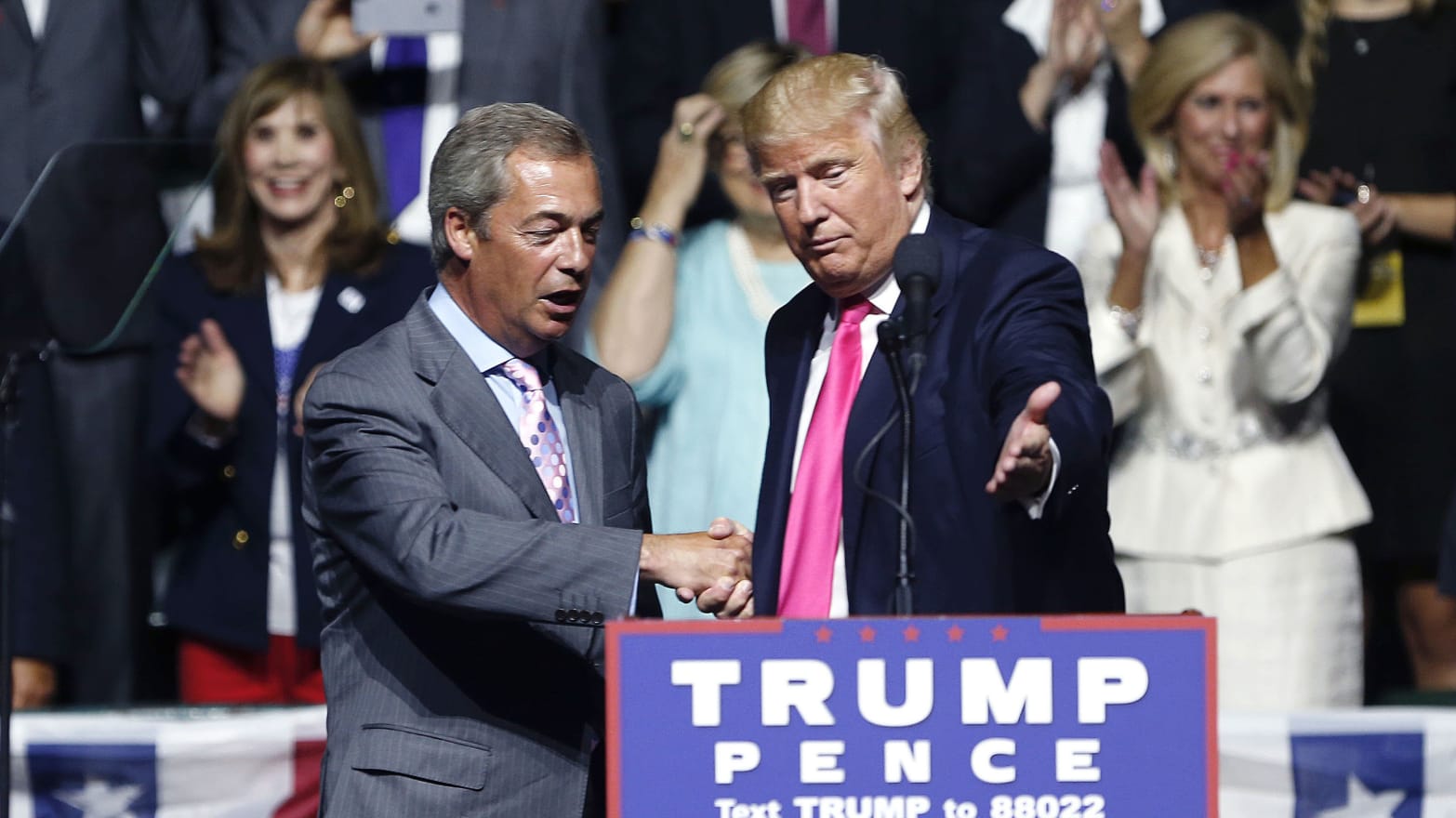
The flame of Fascism was forced underground following the end of the war, but sadly it still burns strong in the hearts and minds of some. Many of the Fascist ideals that spark a movement, such as surveillance and migrant xenophobia have become more prominent and seen as justifiable following the UKs referendum on its EU membership in June 2016. [1]
In the UK there have been a string of small fascist parties and movements throughout the decades, including the likes of National Front, British National Party and National Action. These parties have struggled with electoral success and have only managed a handful of councillors elected between them.[2]
So how has the EU referendum help to facilitate a rise in Fascism you may ask, especially if political parties can’t gain enough Fascist electoral support? Well firstly, we need to try and understand what Fascism is. The concept is unique to each country that adopts it and is often used to loosely describe a government type. It is best described by J.W Aldridge who states it’s ‘a political philosophy, movement, or regime that exalts nation and often race above the individual and that it stands for a centralised autocratic government headed by a dictatorial leader, severe economic and social regimentation, and forcible suppression of opposition’[3].
With that understood, many of its features are seen in dealing with the Brexit referendum. I want to state that this definition does not apply to all leave voters, and indeed there are many logical and reasonable reasons for voting to leave the EU. However, these legitimate concerns are brushed aside by the closet fascists. There are constant connotations between Brexit and a return to the glory days, the days of Empire, Imperialism, British racial and economic supremacy over minorities and foreigners. British university professors Sally Tomlinson and Danny Dorling have called Brexit the “last gasp of the British Empire”. [4]

Surely some could argue that this is just nostalgia from the elderly population. But this doesn’t excuse the countless television and radio interviews with Brexit supporters who time and time again utter words along the lines of ‘send ’em all back to their own country’. [5] This hatred has spilled over into violence. Just as the Nazi Brownshirts would kill or attack those they saw as trying to undermine Germanys future, we have seen similar events, such as the tragic murder of Jo Cox, a remain supporting Labour MP. [6] Her death was at the hands of someone who believed Jo Cox was a threat to the UK and White people by being a defender of the European Union.
Furthermore, there are stark connotations between the Battle of Cable Street in 1936 and protests by far-right leave supporting organisations such as the English Defence League (EDL) or United Kingdom Independence Party (UKIP) in March 2019. Both events involved violent confrontations with the police, with Mosley’s Fascists in 1936 and Tommy Robinsons Fascists in 2019 both fighting for what they believe was to the benefit and future of British citizens. [7] [8]
During time of economic hardship, the right and nationalist parties begin to gain support, this was evident just after the 2008 financial crash in which the BNP saw an increase in support, even resulting in Nick Griffin appearing on BBC Question time.[9] We all know how that went.

What would be the solution in dealing with a fanatical ideology which has become more and more prevalent in British society over the years? It appears we need to adopt the same actions that previous generations did when it came to De-Nazification of Germany after the war. As Tony Blair put it in 1997; Education, Education, Education. A lot of the fascist sentiments fostered by Brits comes from a lack of knowledge or understanding.
Fascism undoubtedly results in persecution of minorities. Individuals needs to learn from previous examples throughout history, not just from Nazi Germany, but also those who lived under Franco’s rule in Spain or under Petain in Vichy France. Those who don’t learn from the past are doomed to repeat it [10]. Fascists take different characteristics from their predecessors, and try to contextualise it for their current issues, such as Muslims being the threat not Jews. By looking at the issue from a historical perspective we can see how the issues were dealt with in the 20th century and better tune them for the 21st.
The worst thing to do, is to do nothing.
[1] Michael Niman, ‘Five forces driving the rise of Fascism in 2019’, January 13th 2019, Truth Out, [Online] Available at: https://truthout.org/articles/five-forces-driving-the-rise-of-fascism-in-2019/.
[2] Thomas P. Linehan, ‘British fascism, 1918-39: parties, ideology and culture’, (Manchester, Manchester University Press, 2000), pp. 166.
[3] J.W Aldridge, ‘Definition of Fascism’, Merriam Webster, [Online] Available at: https://www.merriam-webster.com/dictionary/fascism.
[4] The Week, ‘Brexit: What’s the British Empire got to do with it?’, May 31st 2019, [Online] Available at: https://www.theweek.co.uk/101512/brexit-what-s-the-british-empire-got-to-do-with-it.
[5] Vice News, ‘Why did England’s North vote to Leave the European Union?’, 1st July 2016, [Online] Available at: https://www.youtube.com/watch?v=d1zL3wDLyXk.
[6] The Telegraph, 17th June 2016, pp. 1-2.
[7] Nigel Jones, ‘Mosley’, (Haus Publishing, 2004), p. 114.
[8] Damien Gayle, ‘Anti-Racist Marchers claim victory over far right protest’, December 9th 2018, [Online] Available at: https://www.theguardian.com/uk-news/2018/dec/09/antiracist-marchers-in-london-claim-they-had-more-than-double-the-support-of-far-right-protest.
[9] Mark Thompson, ‘Keeping Nick Griffin off air is a job for Parliament not the BBC’, The Guardian, October 21st 2009, [Online] Available at: https://www.theguardian.com/commentisfree/2009/oct/21/question-time-bbc-bnp-griffin.
[10] George Santayana, ‘The life of reason: The phases of Human Progress’, (Library of Alexandria, 1905).
 Historical Political Analysis