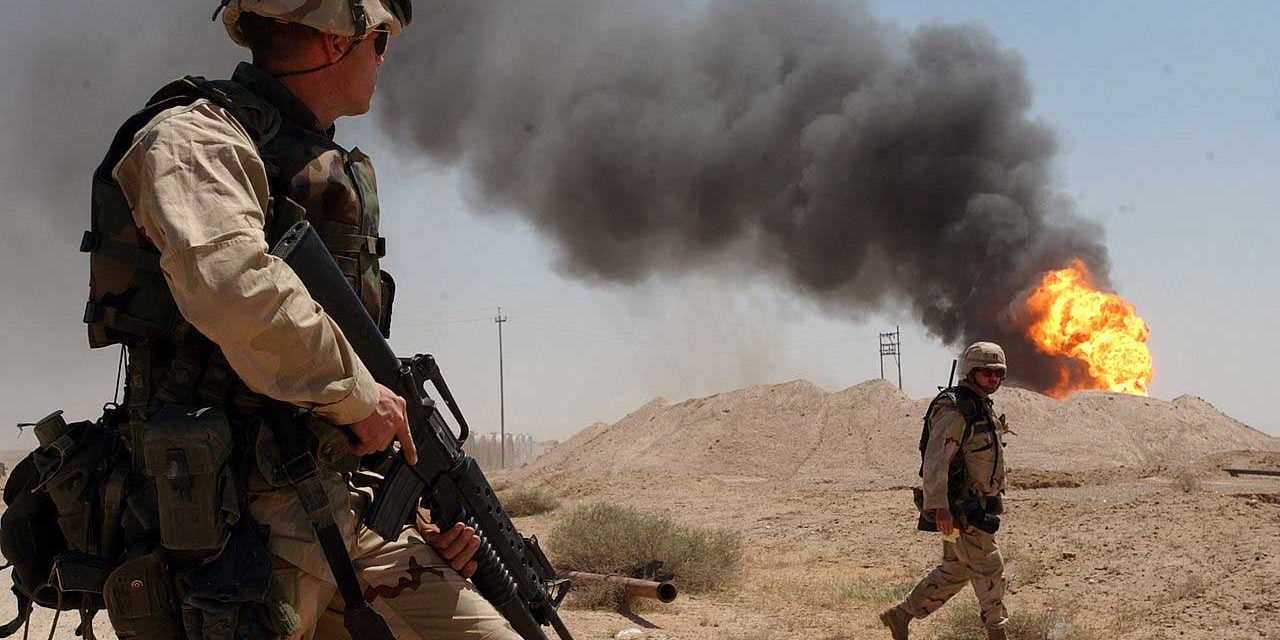
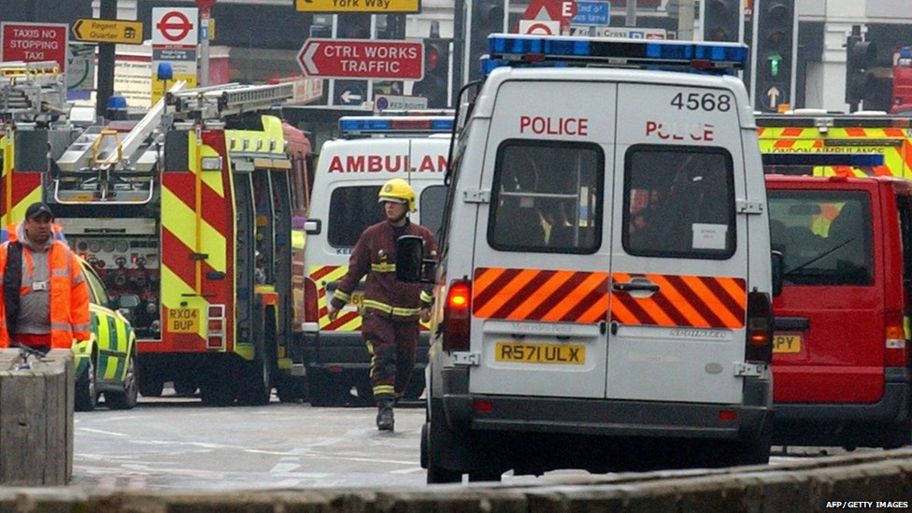
For much of its history, the Middle East has been viewed as a backwards and violent place by many in the West, especially when compared to the likes of Europe and North America. During its control by the Ottoman Empire, it was perceived as an extension to the ‘sick man of Europe’[1]. The West had noticed and exploited the regions instability as far back as 1916 with the likes of the Arab Revolt relying on distrust amongst its citizens based on religious and cultural lines such as Sunni and Shia Muslims[2]. These views have been reinforced since the turn of century, especially after the West had experienced countless terror attacks including bombings of the London Underground on 7th July 2005 and the hijackings of airliners in America on 11th September 2001. With these terrorists committing acts in the name of radical Islam and originating primarily from the Middle East, the Wests views on the region have been distorted based upon the actions of a few. This has resulted in a generalisation of the region, as well as of Muslims as a whole[3]. Not to mention the countless wars including the 2003 Invasion of Iraq, the Gaza Strip conflicts and since 2011 the ongoing Syrian Civil war. Which are constantly dominating the media, it’s hard for the average person to not view the region as one huge warzone.
One of the main reasons the Middle East has been viewed as a place of violence and killing is due to the nature of terror attacks that occur in Europe and the USA. In September 2018 the National Consortium for the Study of Terrorism and Responses to Terrorism (START) published its annual review of Terrorism for the year 2017. It stated that victims of Terrorist attacks increased in the United Kingdom by ‘+356%, from nine people killed in 2016 to 41 people killed in 2017’ as well as in France with a +59% increase[4]. The report also stated that the Islamic State of Iraq and Syria (ISIS or just IS) an Islamic extremist terrorist group was responsible for the most attacks in 2017[5].These attacks have meant that many people associate Islam with terrorism, after all the current most notable group has the name ‘Islamic’ in it (IS). The association is then made with the term Muslim and where they come from, which is primarily the Middle East. Terror attacks can drastically change a nations outlook on certain religions or people, and nowhere was this more evident than after the worst terror attack in modern history, 9/11. These attacks, resulting in just under 3000 deaths, included 67 Britons[6], 24 Canadians[7] and 10 Italians[8] as well as many other nationalities. As a result, hate crimes against Muslims increased rapidly, with hatred based not on an individual’s actions, but on where they come from or what religion they follow[9], as there was no specific state to blame or take action against. These attacks are hard for a nation to forget and are usually an easy go to for xenophobes or racists to blame their issues upon. This fear of terrorists and terrorism means people are less likely to visit the Middle East for naïve reasons such as ‘they might get blown up’ as it is seen as the origin of many terror organisations[10]. The political consequences of this result in less investment and tourism, which can severely hinder Middle Eastern countries economies, which lack modern industrialisation and technology and rely heavily on oil exports[11]. This in turn can have a ripple effect, as the lack of investment in a country because of terror risks, means the country in question has less money to invest in their security forces to try and combat the terror risk in the first place. In other instances, the risk of terror does not even exist. For example, prior to the Arab spring in 2011, Syria was a stable albeit authoritarian country[12], yet uneducated individuals would consider it to have been in the same state as Iraq or Afghanistan.
Another reason the West sees the Middle East as place full of violence and killing, is due to the number of wars that have taken place there over the last 25 years. In Europe, the last major conflict was with the breakup of Yugoslavia in the late 1990’s, which had been considered the first ‘war’ on European soil since the end of WWII in 1945[13]. There has been around 15 years of peace before the current crisis in Ukraine unfolded in 2014. Meanwhile the Middle East has had countless conflicts, including the 2003 Invasion of Iraq, 2011 Syrian Civil War, First Gulf War, Invasion of Afghanistan and numerous smaller Gaza wars of 2008/09, 2012 and 2014, all resulting in far more casualties and deaths[14]. Such a bounty of state conflicts, something which is virtually unheard of in Europe anymore, has had a severe impact on the region internationally. To start with, these conflicts often result in other states evacuating their embassies and informing their citizens not to travel to the affected country [15][16][17]. These actions can cause a state to become isolated on the international stage, and the lack of diplomatic and consular support for foreign nationals further hinders the Middle Eastern states relations. Western leaders have also helped to portray the Middle East in a negative light, with two states being described as part of a ‘Axis of Evil’ Iraq and Iran[18]. Whenever the Middle East is discussed in Western parliaments or governments, it is usually to a prelude of war, as was the case in the 2014 British parliament vote on airstrikes against ISIS in Syria. The speeches made by MP’s to try and gain support for their proposition, often focus on the suffering these citizens are experiencing, further exaggerating our views of the region as violent and a place of killing[19].
Lastly, the role of religion in the Middle East has had a significant contribution in portraying the region as violent. Much of the area, apart from Israel, follows some form of Sharia law[20]. For Western secular democracies based on Christian values, such a link between the state and religion is viewed negatively. The violent parts of sharia law such as the death penalty for apostasy or cutting of hands for theft[21], are often the only aspects that non-Muslims are aware of. Despite the fact it is not fully enforced across the region and varies in its severity, it still acts as a deterrent to certain groups. Marginalised groups in society such as members of the LGBT+ community, Christians and Atheists would be hesitant to immigrate to such countries that hinder their own personal freedoms. There are genuine fears for their safety, especially as a lack of stable governments due to the reasons previously mentioned can result in vigilante justice prevailing in countries that have legalised homosexual acts for example, such as Iraq in 2003[22]. Such persecution of minorities, often resulting in violence and in some cases death, can have dire political consequences. Global institutions such as the UN can put pressure on these countries to improve their human rights records or face the risk of sanctions[23]. Such poor Human Rights records in the Middle East accompanied with what the West believes are backwards and outdated laws, show the region to be almost barbaric and living in the past. The common attribute prescribed to barbarians are of course violent individuals. This does of course raise the question about whether the West is right to criticise the rulings of other countries. Many in the Middle East may ask what makes the Wests style of government and society the ‘correct’ way to run a country? Many classical realists may adopt the approach that a state sovereignty is supreme over any NGO or international body.

This is based primarily of the Treaty of Westphalia in 1648 which argues that a state has the right to do as they please within their own borders[24]. Despite this justification for how states may act in the Middle East, the fact remains that the region still harbours terrorists, is rife with wars and instability and poses a risk to life for many minorities who would otherwise be well protected in the West.In conclusion, the main reasons the West define the Middle East as a place of violence and killing is due to the prevalence of terrorism in the region, as well as being where many terrorists who attack Europe train or originate from[25]. This is accompanied by the high number of wars prevalent, and the instability of governments, resulting in failure to uphold human rights. The political consequences of this fall into two main areas. Firstly, the population of Western powers are less likely to invest or visit the Middle East due to the fear of attacks, which in turn results in Middle Eastern states not being able to improve their economies. Improved economies can result in better living conditions of Middle Easterners, including better education which in turn could help deter many people from terrorism or violence and peruse more peaceful means to achieve their aims or goals. Secondly, the perceived aggressive mannerisms from these states[26] can result in them becoming isolated on the world stage. This in turn can result in them taking more aggressive foreign diplomacy actions to still be viewed as great powers. Thus, making them appear more violent
[1] M. Reynolds (2011), ’Shattering Empires: The clash and collapse of the Ottoman and Russian Empires 1908-1918’, Cambridge University press, Cambridge, UK, pp. 1-3.
[2] E. Tauber (2014), ‘The Arab Movements in World War I’, Routledge, New York, USA, pp. 80-81.
[3] R. Hardy (2010), ‘The Guardian: Islamism why the west gets it wrong’, [Online] Available at: https://www.theguardian.com/commentisfree/belief/2010/mar/16/islamism-west-muslim-brotherhood.
[4] National Consortium for the Study of Terrorism and Responses to Terrorism, ‘Annex of Statistical Information Country Reports on Terrorism 2017’, September 2018 [Online] Available at: https://www.state.gov/documents/organization/283097.pdf, pp.1-7.
[5] Ibid, p.3.
[6] S. Atkins (2011), ‘The 9/11 Encyclopaedia’, Santa Barba, California, USA, p.248.
[7] ibid
[8] N. Aldern (2011), ‘Italy Magazine: Remembering the Italian victims of 9/11’, [Online] Available at: https://www.italymagazine.com/featured-story/remembering-italian-victims-911.
[9] CNN (2001), ‘Hate crimes reports up in wake of terrorist attacks’, [Online] Available at: https://web.archive.org/web/20051127025019/http://archives.cnn.com/2001/US/09/16/gen.hate.crimes/. [Archived].
[10] T. Regan (2018), ‘The Arab Weekly: Tourism growth a ‘mixed blessing’ for some countries in the Middle East’, [Online] Available at: https://thearabweekly.com/tourism-growth-mixed-blessing-some-countries-middle-east.
[11] G. Abed and H. Davoodi (2003), ‘IMF: Challenges of Growth and Modernisation in the Middle East and North Africa’, [Online] Available at: https://www.imf.org/external/pubs/ft/med/2003/eng/abed.htm.
[12] M. Weiss and H. Hassan (2016), ‘ISIS Inside the army of terror’, Regan Arts, New York, USA. Pp. 97-103.
[13] A. Williams (2016), ‘New Statesmen: How valid is the claim that the EU has delivered peace in Europe?’, [Online] Available at: https://www.newstatesman.com/world/2016/05/how-valid-claim-eu-has-delivered-peace-europe.
[14] R. Fawn and R. Hnnebusch (2006), ‘The Iraq War: Causes and consequences’, Lynne Rienner Publishers, London, England, p.15.
[15] UK Government (2019), ‘Foreign Office: Syria travel advice’, [Online] Available at: https://www.gov.uk/foreign-travel-advice/syria.
[16] UK Government (2019), ‘Foreign Office: Iraq travel advice’, [Online] Available at: https://www.gov.uk/foreign-travel-advice/iraq.
[17] UK Government (2019), ‘Foreign office: Terrorism risk to British and Dual nationals in Iran’, [Online] Available at: https://www.gov.uk/foreign-travel-advice/iran/terrorism
[18] George W. Bush (2002), ‘State of the Union address’, [Online] Available at: https://www.youtube.com/watch?v=btkJhAM7hZw.
[19] Hillary Benn (2015), ‘Address to Parliament on the vote of Airstrikes in Syria against ISIL’, [Online] Available at: https://www.youtube.com/watch?v=n2GTNK4VsXs and transcript at: https://publications.parliament.uk/pa/cm201516/cmhansrd/cm151202/debtext/151202-0001.htm#15120254000002.
[20] A. Puddington (2013), ‘Freedom House: Freedom in the world 2013’, [Online] Available at: https://freedomhouse.org/sites/default/files/FIW%202013%20Booklet%20-%20for%20Web.pdf.
[21] B. Lewis (2009),’ The Middle East: A brief history of the past 2000 years’, Simon and Schuster, New York, USA, p.229.
[22] The Week (2019), ‘The countries around the world where homosexuality is still illegal’,[Online] Available at: https://www.theweek.co.uk/96298/the-countries-where-homosexuality-is-still-illegal.
[23] UNHR Office of High Commissioner (2019), ‘United Nations Human Rights for Middle East and North Africa’, [Online] Available at: https://www.ohchr.org/EN/Countries/MENARegion/Pages/MENAProgramme.aspx.
[24] The Watchtower (2004), ‘The Peace of Westphalia – A Turning Point in Europe’, [Online] Available at: https://wol.jw.org/en/wol/d/r1/lp-e/2004205#h=1.
[25] M. Weiss and H. Hassan, Op.cit, pp.52-58.
[26] B. Rubin (2006), ‘The long war for Freedom: The Arab struggle for Democracy in the Middle East’, John Wiley and Sons, New Jersey, USA, p.81.
 Historical Political Analysis